
ERP Platforms
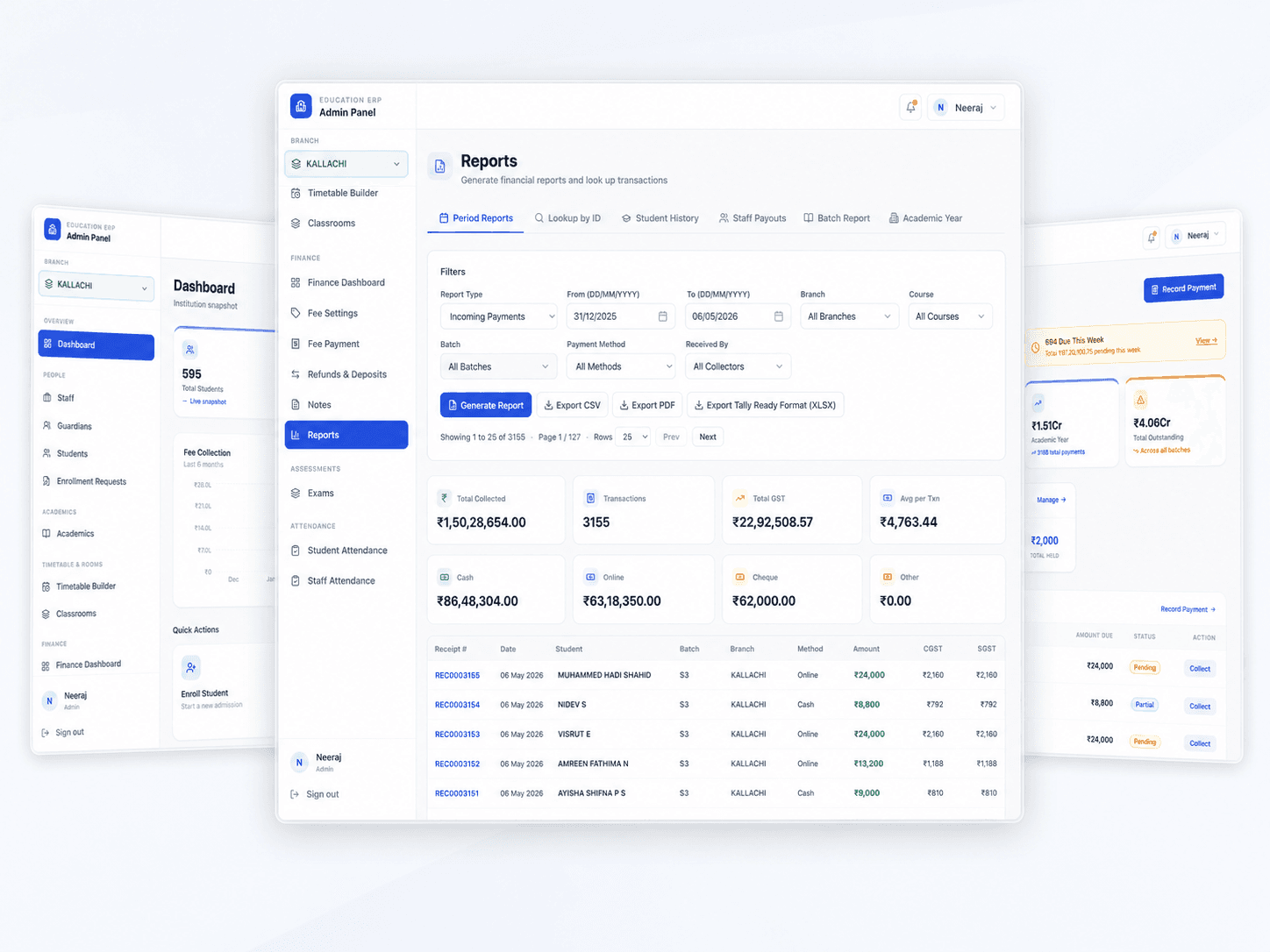
Custom ERP platforms for education, factories, warehouses, and operations-heavy businesses that need workflows, staff roles, approvals, stock, tasks, reports, and integrations in one controlled system.
Built For
Schools, institutes, factories, warehouses, distributors, service teams, multi-branch businesses, and companies that have outgrown spreadsheets or generic tools.
Core Use Case
Plan and run daily business work from one ERP: admissions or academics, production, inventory, procurement, dispatch, staff activity, approvals, finance visibility, documents, and management reporting.
Differentiator
Can be built on top of existing Legacium platform foundations or custom-built around the customer's actual workflows, departments, approval rules, data fields, and reporting needs.
Capabilities
The main parts your team can manage.
Each section is planned around the people using the platform, the tasks they complete, the information they need, and the reports managers rely on.
Education ERP
01- Manage admissions, students, staff, classes, batches, attendance, fees, notices, documents, exams, transport, and parent or student communication.
- Give admins, teachers, accountants, counsellors, students, and parents the right access for their daily work.
- Connect learning, exam, CRM, payment, and reporting modules when the institute needs one full education operating system.
Factory and warehouse ERP
02- Track raw materials, stock, suppliers, purchase requests, production stages, quality checks, work orders, packing, dispatch, and returns.
- Support warehouse locations, bin movement, inward and outward entries, low-stock alerts, transfer requests, and inventory reports.
- Give production, store, purchase, dispatch, accounts, and management teams clear dashboards and approval flows.
Custom workflow ERP
03- Model departments, roles, forms, approvals, task ownership, escalations, documents, notifications, and audit history around the customer's process.
- Build sector-specific ERP modules for services, branches, vendors, assets, maintenance, HR, finance visibility, field operations, and reporting.
- Integrate existing tools, migrate useful data, and launch the ERP in stages so teams can adopt it without stopping daily operations.
Business outcomes
These platforms are designed to support daily business work, not just add a few disconnected features.
Replace scattered spreadsheets, chats, and manual approvals with one business operating system.
Adapt ERP workflows to the customer's departments instead of forcing the team into a generic template.
Use existing platform foundations where they fit, then custom-build the parts that make the business different.